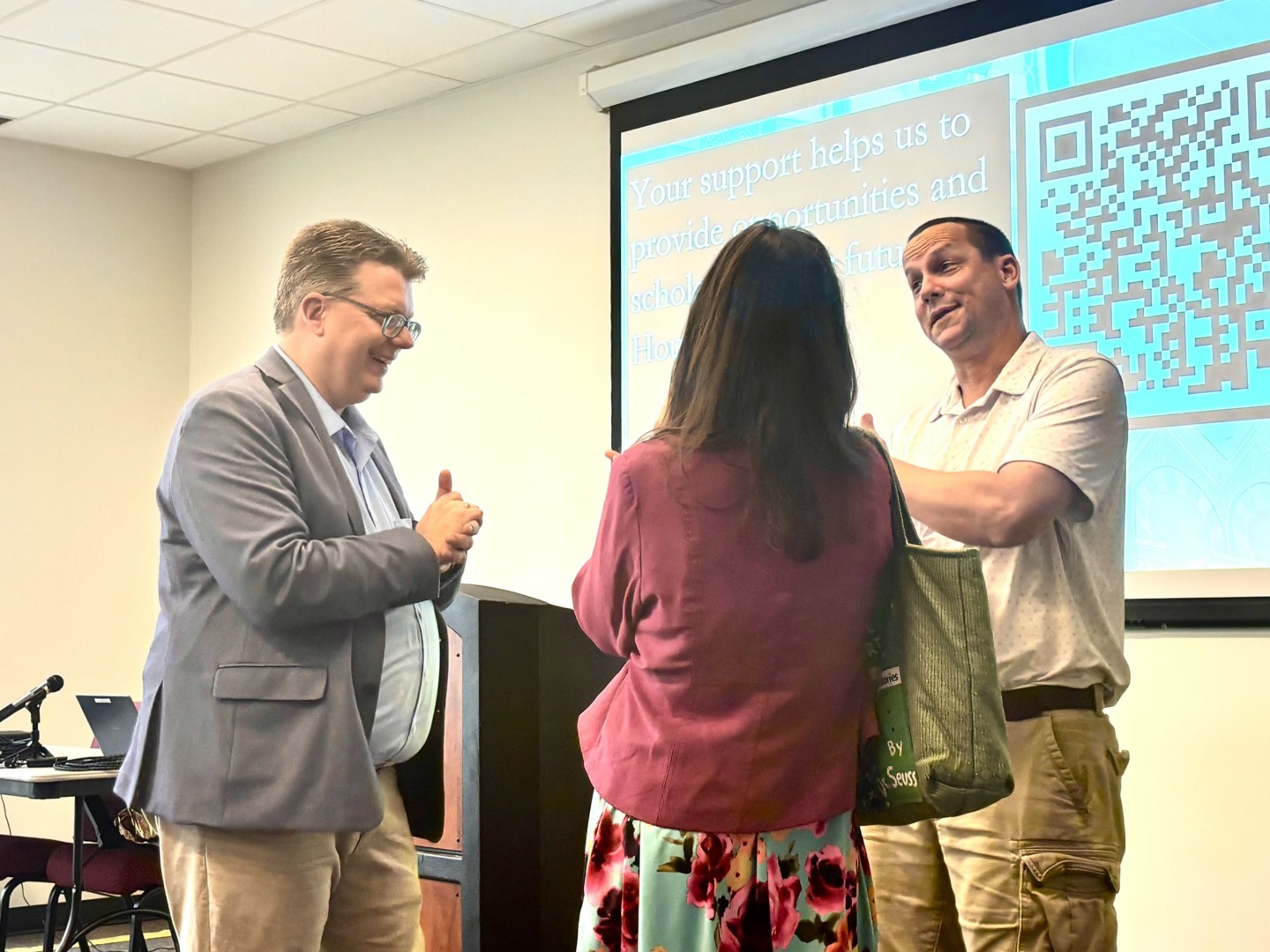
The Jewish Studies program hosted a public lecture as part of its series on antisemitism and intersectionality on October 12, 2026, in Houston, Texas. | Audrey Szeto/The Cougar
The Jewish Studies program hosted a public lecture on Oct. 12 as part of its series on antisemitism and intersectionality.
The speaker, Daniel Joslyn-Siemiatkoski, is an ordained priest and director of the Center for Christian-Jewish Learning at Boston College.
In the lecture, Joslyn-Siemiatkoski discussed the typologies of Christian nationalism and the difference between anti-Judaism and antisemitism.
He said that Christian nationalists believe the U.S. was founded on a Christian basis by white men, and that the nation’s success comes from divine right.
Joslyn-Siemiatkoski derives the definition from the “deep story” model by Gorski and Perry.
“(The U.S.)is a huge country,” Joslyn-Siemiatkoski said. “The fact that one country controls this whole blank mass is, regardless of how you thought it happened, a remarkable event. Christian nationalists see that kind of event as having theological or religious significance.”
Joslyn-Siemiatkoski said that Christian nationalism becomes more extreme when Christian nationalists seek to fuse Christianity with state power due to a perceived cultural loss.
“Non-Christians in this movement, immigrants and others, are denied various forms of innate rights of self-determination, especially the more we move into Christian statism,” Joslyn-Siemiatkoski said. “It’s anti-democratic. It’s anti-republican. It violates the principles of the United States as established.”
Joslyn-Siemiatkoski also defined anti-Judaism as the theological notion that Christianity has replaced the Jewish people as the covenant, or the people God favors. He said antisemitism is a more modern framing focused on race, belonging and citizenship.
World cultures and literature senior Cayla Fast is focusing her senior honors thesis on Christian nationalism and online content creators. Fast said that the lecture introduced new ways to explain anti-Judaism, which can help evolve her research ideas.
“I now have a new framework to explain anti-Judaism, and not just lump it under anti-Semitism,” Fast said. “I think he hit the nail on the head when he said there’s a lot of conflation, and that’s something I’ve seen in my research as well.”
The lecture also helped students think about topics they would be interested in researching. Psychology and religious studies senior Muhammad Hani Mirza said that Joslyn-Siemiatkoski’s lecture made him want to learn about the role that Christian nationalism plays in Islamophobia.
“Something that sparked my interest was the role Christian nationalism plays in our society today, and the perceptions that we develop,” Mirza said. “I would like to look further into the role the media plays in this particular aspect, and the language media uses – not only for antisemitism, but also for Islamophobia.”
Christian nationalism trends toward authoritarianism. Because of this threat, the affected Jewish, Black and immigrant communities should build bonds, even when it’s uncomfortable, Joslyn-Siemiatkoski said.
“I thought the point about how to respond to Christian nationalism from institutions and people of power [was interesting],” said public policy and religious studies junior Han Nguyen. “Because the dominant attitude is: we talk about it, we discuss it, but we don’t talk about what to do – how to respond to this movement.”
news@thedailycougar.com