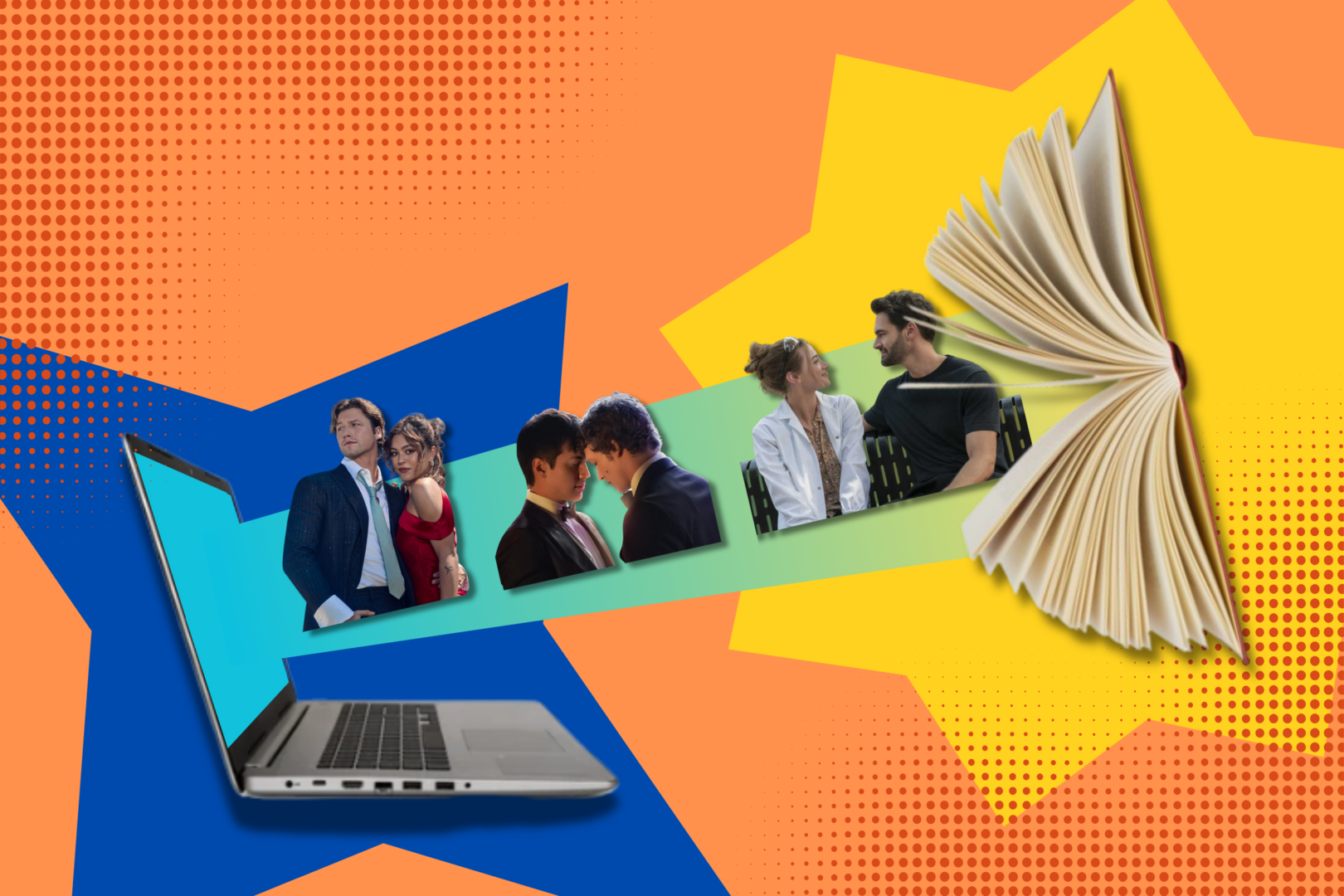
 There have been many book-to-movie and book-to-TV adaptations lately, with some getting fans excited while others leave audiences disappointed. Readers anticipate their newest read coming to screens, but only at the expense of characters sticking to their dream casts.
Adaptations such as “The Love Hypothesis,” “Off Campus” and “Heated Rivalry,” along with the announced “Boys of Tommen” series, have sparked controversy among readers.
Very few are successful and praised by fans, while most make audiences question whether Hollywood has become too dependent on preexisting stories. Why have book adaptations become so common?
The Love Hypothesis
Prime Video has recently been on a streak with top book adaptations and the fan divide is ever-present. The Love Hypothesis is Prime’s recent endeavor, released Sep. 25. Long-time fans were eager to see the Kylo Ren and Rey fanfiction come to life.
With Lili Reinhart starring as Olive Smith and Tom Bateman as Dr. Adam Carlsen, fans were excited to see casting that was relatively accurate to their expectations.
However, many fans noticed a lack of chemistry between the two in the film. Some were upset that the movie did not capture the book’s strong emotional depth. The actors’ performances felt awkward and the crucial yearning from Dr. Carlsen’s character was noticeably missing.
Boys of Tommen
A television adaptation of the popular book series “Boys of Tommen” was announced over the summer. The series is about a group of teenagers in Ireland who all experience different types of trauma, but heal together in their found family.
“Binding 13,” the first book of the series, was first published in 2018. The 5th and most recent book, “Releasing 10,” was published in 2025.
Since the books have been out for a while, fans have produced several “fan casts” featuring various TikTokers and actors who resemble the characters. The fan casts have been circulating since the books became popular on BookTok around 2020, shaping how readers envision the characters.
Readers had a lot to say when the television adaptation was announced. Many stated that the actors cast in the roles did not look book-accurate. They began comparing the actors to their fan casts, even going so far as to send hateful comments and messages directly to the actors.
They expressed concerns that the books’ heavy topics, such as bullying, abuse and sexual assault, could not be properly portrayed in the show and feared that the adaptation would downplay their seriousness.
Many other fans were frustrated with yet another book-to-show adaptation.
Beyond adaptations
“The Love Hypothesis” and “The Boys of Tommen” are just two examples of the many stories that have built dedicated audiences. Fans create connections with these books long before they ever reach the screen, making expectations surrounding an upcoming adaptation almost impossible to recreate.
Readers often develop their own interpretations of characters, from their appearances to their personalities and even the smallest details. When Hollywood brings these characters to life, those expectations are challenged, leaving fans disappointed when the adaptation doesn’t match what they had imagined.
Hollywood’s growing dependence on stories that already have an audience is leaving readers never satisfied with adaptations and viewers frustrated by constant comparisons to books they don’t care enough to read.
With the rise of BookTok, studios have found an opportunity to capitalize on books that already have dedicated fan bases. Rather than taking a chance on something original, Hollywood continues to rely on stories with an established audience, raising the question of whether creativity is being sacrificed for guaranteed attention.
Conflict of interest
The problem with book-to-movie adaptations isn’t that nobody’s watching them or that they necessarily don’t like them. Readers express frustration, comparing the on-screen adaptations to the books and pointing out inaccuracies, but this also opens doors to new audiences.
Non-readers view these shows and movies as simply new. The fandom naturally grows and expands. While this benefits authors, readers begin to feel disconnected from their favorite books and series.
Rather than constant adaptations happening, there needs to be more creativity in TV. It’s starting to feel repetitive. Especially for individuals who are both readers and chronic TV connoisseurs, there’s a loss of new content to consume.
After so many book adaptations, it can be difficult to bring an existing story to the screen and truly capture what made the original so special. Hollywood is pushing too many book adaptations, causing stories that were compelling on the page to feel rushed and unoriginal on screen.
Book adaptations alone are not necessarily the problem. The concern arises when they become the safer choice over creating something new. When adaptations become the norm, audiences have to wonder what ever happened to Hollywood’s own ideas.
While adaptations can be entertaining, sometimes stories are better left as ink on paper rather than brought to the screen.
opinion@thedailycougar.com