Nina To/ The Cougar
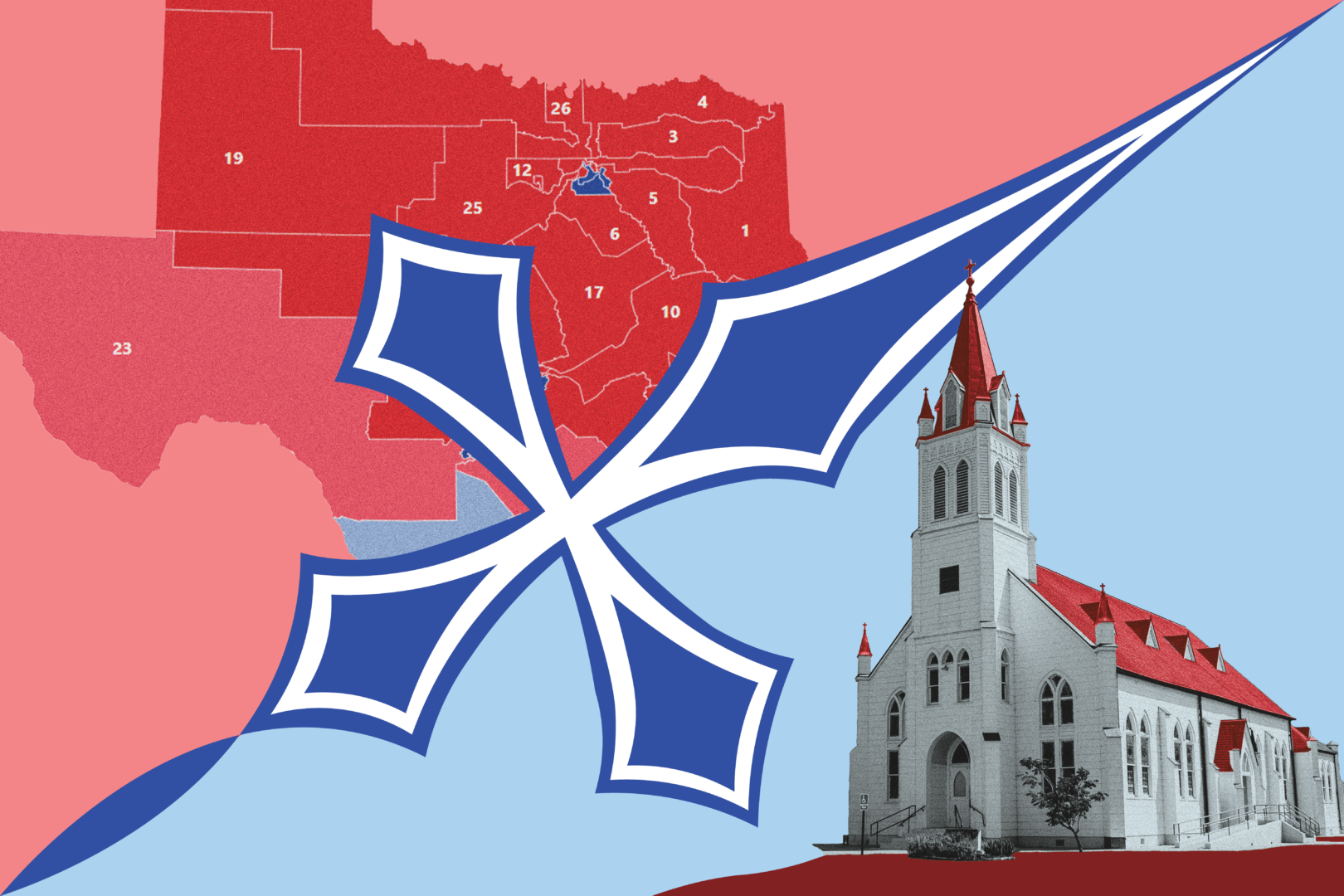
As polarization in voter turnout rises and campaign tactics become more targeted, candidates are increasingly incorporating religious language and identity into their messaging to voters.
In a recent New York Times article, James Talarico is a Christian X-Ray, opinion writer David French comments on James Talarico’s recent campaigning.
He states, “He’s one of the most faith-forward politicians in the United States.” Talarico utilized his faith to create a forward-facing campaign for the democratic party and arguably is the first to successfully implement it. By strategically leveraging faith and identity politics, politicians are able to subvert political deliberation into group identity, challenging the ethical boundaries of modern campaigning tactics.
Christianity in politics
We’ve seen different figures with political power deliberate Church and State, as well as ground what appear to be sound arguments into religious rhetoric.
The late Charlie Kirk delivered a rebuttal in August 2024, stating, “ You cannot say you believe in biblical principles and vote for the principles of the democratic party.”
Nationalists like Kirk believe that the democratic party is known for being incongruent with Christian ideals, and they leverage this belief to shame Christians out of voting Democrat.
Kirk antitheses his statement by supplementing how Joe Biden spent more time on Easter Sunday talking about Trans rights instead of the resurrection of Jesus Christ.
The idea that religious holidays should be subordinated to political agendas is an indicator of where we are as a society in terms of conservatism.
James Talarico, on the other hand, leans against Christian Nationalists, stating it’s the “Cancer of Christianity.” And even condemning the Christian Nationalists who stormed the Capitol and those who seek to trade public education for private Christian schooling.
The issue with appealing to one’s religious ideals, whether it be to leverage freedom or rule, is that it can signal that some beliefs are more legit than others. This risks marginalizing voters who are of different faiths or who are secular.
Ethics without religion
The Talarico approach, as well as those who fell in line with the late Charlie Kirk, both ground their decisions in the moral obligations or scriptures of the Bible.
This raises the question of whether or not moral legitimacy could be claimed if political leaders identified as agnostic or atheist. If dominant religious beliefs or traditions can shape political arguments, should other minority religions be granted the same influence in political debates?
These questions have the potential to erode the democratic principle of religious liberty because this liberty applies to members of a society, not democratic institutions and policies.
I believe that it is possible to make sound arguments and decisions for the greater good based on ethical lenses that consider all aspects of society, rather than objective moral truths that stem from religious beliefs.
By setting aside conversations over the Resurrection, the Ten Commandments and scriptural references, politics shifts from defending faith and becomes a conversation of the strongest ethical framework.
Identity politics, political campaigns
As identity intersects with politics and enters campaign tactics, where should the line be drawn when using identity to appeal to voters? American Philosopher John Rawls, in his book Political Liberalism, makes an argument that political decisions should be justified using public reason.
The idea of public reason is that arguments that all citizens, regardless of identity, can accept. Though if campaigns are relying heavily on religious or identity-based reasoning, they risk violating the idea of public reasoning because identity-based arguments are only available to those who identify.
I don’t believe in eradicating religious symbolism or even identification in politics, but I do believe political decisions and discussions should be held in a language that is accessible to all citizens and not just those of a certain belief.
My argument is also not that political candidates shouldn’t appeal to identity in politics, but rather that identity should not be a mechanism to illegitimize opposing political groups.
Conclusive remarks
Campaigning strategies are fundamental to the democratic mechanism of voting. James Talarico and the late Charlie Kirk both spoke of proverbs and religion. Talarico highlighted religious freedom and caring for thy neighbor, while Kirk preached religious conservatism.
If political leaders were more concerned with the ethics of policy rather than the identity that the policy most aligns with, perhaps its citizens would reside in healthier communities.
I don’t doubt that religious or other aspects of identity make candidates more or less ideal, but I advise maintaining the separation of Church and State and petitioning to keep political campaigns political.
opinion@thedailycougar.com