Haya Panjwani/The Cougar
Editor’s note, 10/27/2025: This article was updated to fix some errors. A sentence was corrected to clarify the amount of fees SFAC allocates, clarify that SGA was not abolished and provide the names of the correct students who recommended students for University committees.
Every year, the Student Fees Advisory Committee recommends how student fees should be allocated across campus to the university president and vice president for student affairs.
The amount of fees allocated by SFAC is a base budget of $25.4 million, and the allocated one-time fees will total $2.25, which is an addition to the base budget.
Last year marked the first time in President Renu Khator’s 16-year tenure that she rejected SFAC’s recommendations when the committee proposed a cut of $1.5 million from UH Athletics.
This led to several protests from students and raised questions about how much influence they truly have over where their fees go.
Eventually, the committee and UH administration reached a resolution and the University was able to allocate around $1.6 million for the student fee committee to utilize, with a majority going toward Counseling and Psychological Services.
This year, UH students are facing a different dilemma: The student government meant to appoint student representatives to the SFAC Committee has been temporarily paused due to a lack of consensus on its new constitution. This left three student-representative seats empty, leaving a gap in student representation.
Student concerns
UH is a public university with a Texas Education Code that legally requires the implementation of a student-majority representative group to recommend fee allocations to the Board of Regents, president and administration of the UH System.
According to that code, if a student government does not exist, the students shall be elected by the students enrolled in the university.
Over the summer, the UH administration established a student-focused working group composed of several student leaders on campus meant to represent the student population, to draft new constitutional documents.
Those students were former SGA President Diego Arriaga, former Metropolitan Volunteer Program Director Omar Castanon, Residence Halls Association President Yhoalibeth Guerrero Becerril, Orientation Team Captain Alex Inzar, The National Residence Hall Honorary President Zainab Khimji, Interfraternity Council for Greek Life President Alex Koennecke and Commuter Assistant Skyla Spence.
This group is different than the working group that reviewed, interviewed and recommended students for university committees. The group that recommended students for university committees are former SGA Chief of Staff Daniela Gonzalez, former SGA president Diego Arriaga, former Speaker of the Senate Tav Cockrell, Council for Cultural Activities Council Liason Lerma, Metropolitan Volunteer Program director Jordan Porter and former Activities Funding Board Chair Julienne Saldon.
From there, former SGA President Diego Arriaga, along with students Juan Gonzalez and Kathreen Hookfin were appointed by the student-focused working group as the student representatives of the student fee committee.
However, there are some concerns regarding how the students were chosen to be in the work group, and if it actually counts as student representation if they were chosen by the UH administration.
“When the UH administration handpicked people for SFAC, they treated the appointment process for the student fee committee like any other committee they could violate without legal consequence,” said honors public policy junior Joshua Sambrano, a student behind Get Back SFAC who demands UH hold an election for the student SFAC seats.
Despite concerns brought up by the few remaining voices of the student body, Sambrano said, it added to a picture that advocacy organizations across campus have seen before.
“The UH administration would rather break the law than engage in the negotiation that genuine, shared governance requires. But obviously, they can act,” Sambrano said. “That’s why I and dozens of others have brought together Get Back SFAC — to regain our legally required student-approved majority on the only committee that handles the allocation of millions in fees.”
A student representative on SFAC who was elected by the student-focused working group said they understand these concerns, but believe the job still has to be done.
“I would pose the question: are we not students? We’re doing what’s best for the students. If we do things that harm the student body, we’re shooting ourselves in the foot,” the SFAC student representative said.
UH administration’s response
According to Vice President for Student Affairs Paul Kittle, UH’s decision to establish a student-focused working group was to ensure students remained represented.
“The Texas statute requires that SFAC include elected student representatives, but waiting until the February 2026 SGA elections would have left a gap of nearly a year,” Kittle said. “To ensure students remained represented, the University worked with a group of current student leaders to conduct interviews and fill committee seats on an interim basis.”
This pragmatic approach guaranteed that student perspectives will continue to shape decisions, Kittle said, while setting the stage for a return to the normal election process when SGA resumes its full function next spring.
According to a University official familiar with the process, the UH administration did not select or appoint any students for university committee service.
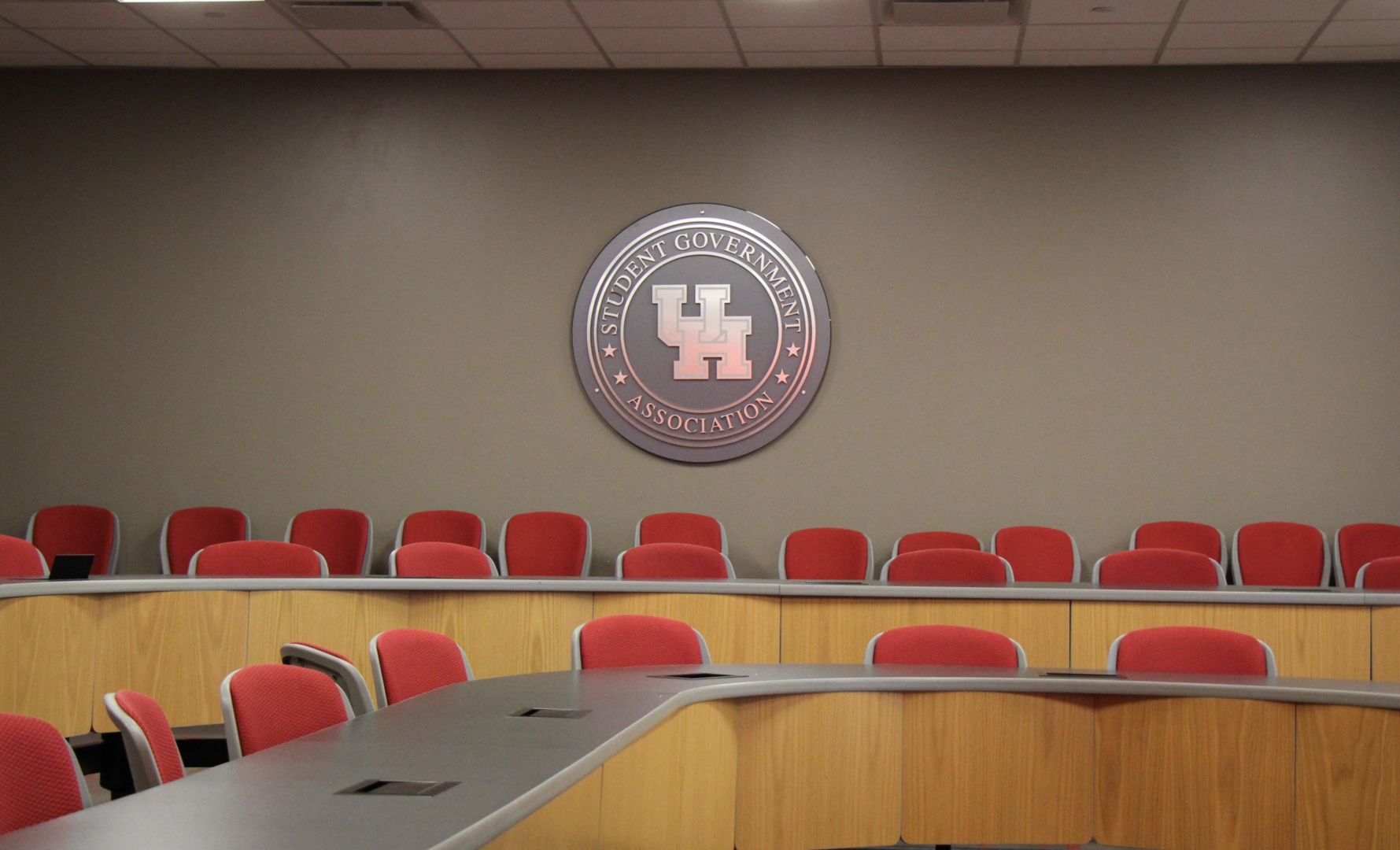
Presentations to SFAC are on Monday, Oct. 27, at Student Center North in the Senate Chambers. There is a 10-minute public comment period at 1:20 p.m., where students could speak to the committee.
Get Back SFAC organized a protest, which will be on the second floor of Student Center North on Oct. 27 from noon to 3 p.m.
The SFAC presentation schedule can be found here.
news@thedailycougar.com