Eddie Ducote/ The Cougar
In March, I packed a suitcase and took off on a road trip to Big Bend National Park. Driving through the West Texas desert, I couldn’t help noticing the small patches of civilization scattered amongst miles of barren highway- places that feel like they’re slowly being left behind.
One of these lost places was a town called Shafter. A green road marker labeled it a “ghost town,” but it was once the largest silver-mining hub in Texas. Now the whole place was little more than a church, a graveyard and some ruins overlooked by the mountains on the horizon. Population: 33, and falling every year.
And towns like Shafter aren’t disappearing by accident.
When I got back to Houston, I was shocked by the sheer number of people. While I was glad to be home, the crowds and the smell of car exhaust felt more overwhelming than ever. My 18-mile commute to campus, which would take 20 minutes in the countryside, took me 45.
The uneven population distribution is a concerning trend that’s been escalating in recent years. While Shafter was abandoned in the 1940s, many towns today are following suit.
There are about 511 ghost towns in Texas, even though our cities are some of the fastest-growing in the nation. Houston had the second-highest population increase in 2024, beaten only by New York City.
While rural towns in West and Central Texas are slowly bleeding out their residents, Houston gets more crowded every year. As Sandy Fortenberry, chair of the Lubbock County Historical Commission, predicts, “The day of the small town is probably gone.”
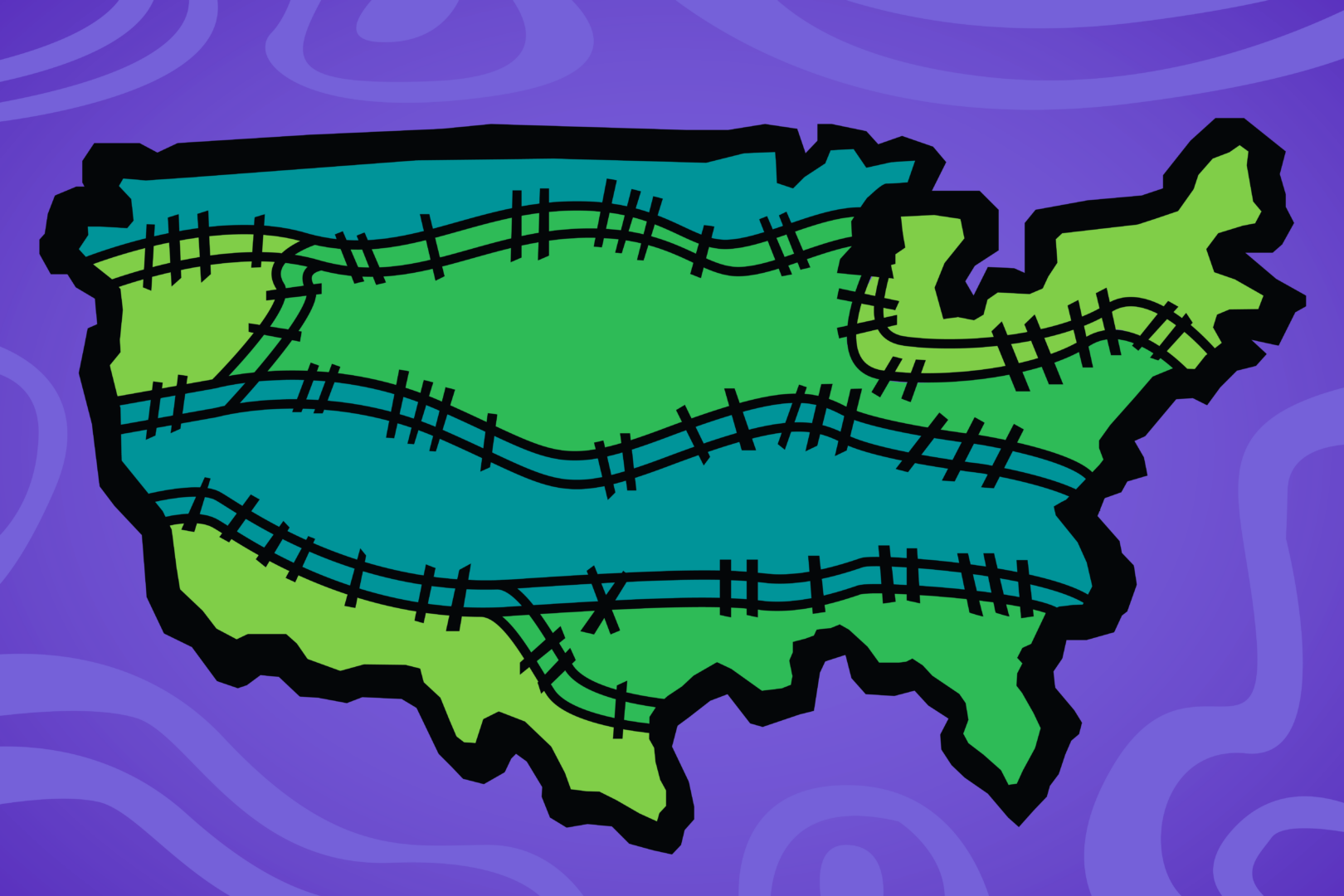
But that doesn’t mean small towns are doomed. If we want to keep rural Texas alive, it may be time to stop building highways and start laying down railroad tracks to our remote neighbors. If we don’t, I-10 might just end up with another lane instead.
A state built for trains
Texas already has some rail infrastructure in place connecting its major cities. Yet, most Texas trains are freight trains, and passenger lines like the Texas Eagle serve limited areas in Central and West Texas. Texas, like most of the U.S., also lacks any high-speed rail, forcing people to rely on cars and planes.
The biggest thing killing Texas towns like Shafter is the lack of economic opportunity for its residents. However, wherever rail is built, people tend to follow.
The construction of railroads would revitalize small-town economies by creating jobs, while faster, more affordable transportation of people and goods would attract tourists and encourage businesses to settle permanently.
This would greatly ease the burden on cities like Houston; if downtown were just a quick train ride away, farmers and people seeking opportunity wouldn’t have to move right into the city.
Randal O’Toole, a writer for Forbes, argues that high-speed rail became obsolete in 1958, when Boeing’s 707 entered commercial service. He believes building a network of rail would be a massive money sink because airplanes are faster than even the best bullet trains. He also cites that the average cost of airfare is lower per mile than that of an Amtrak ticket.
However, O’Toole doesn’t account for the fact that most people aren’t taking planes to travel within their own state. Intrastate flights make up only a small fraction of American air travel, and traveling by plane is more of a hassle since you have to get through security and board at a specific time.
If a person misses their flight, they must reschedule and lose hundreds of dollars, whereas high-speed trains require little more than a ticket, have no luggage limits and arrive every few minutes.
Why trains still matter
The benefits of bullet trains cannot be reduced to their speed alone. O’Toole believes trains will never replace cars because “The United States doesn’t have enough conventional train riders for high-speed rail lines to succeed.”
However, even car lovers could be incentivized to make a lifestyle change if they grew tired of high gas prices. In 2025, the average American household spent about $2,400 on gas, or 3.1% of its annual budget. This doesn’t even include the environmental and time costs of personal vehicles.
Trains emit much less greenhouse gas than cars, which will reduce the effects of climate change and help mitigate it. This would also mean Houstonians breathe in less smog. Moreover, bullet trains would reduce the horrible congestion on our roads and give people more time with their families and hobbies.
If you sit in traffic 30 minutes a day, five days a week, you are wasting two and a half hours of your life on the road. Billions of dollars in national debt doesn’t seem like such a high price when it pays for our time, sanity, health and planet.
America used to be a technological trendsetter. Our thinkers invented light bulbs, cotton gins, smartphones and steam engines. Yet we are refusing to adopt a technology used by many global leaders because of our fixation on cars and the convenience of air travel.
Ironically, the United States was the first country in the world to complete a major transcontinental railroad, a revolutionary act that unified the nation’s economy and led to the establishment of many brave pioneer towns, such as Shafter.
It’s time for America to take care of its former frontiers and invest in intrastate high-speed rail, before we get left behind by countries like China.
opinion@thedailycougar.com