Hailey Nguyen/The Cougar
“As soon as you are born, you’re given a name, a religion, a nationality and a race. You spend the rest of your life defining and defending a fictional identity.”
I found this line on Facebook, accompanied by a melodramatic picture of a baby with a barcode on its forehead. It’s one of the millions of “deep” quotes on Facebook of ambiguous origin, but it made me wonder: are our identities fictional if most of our basic traits are assigned at birth? And how loyal should we be to the parts of ourselves inherited through geographic chance?
Of the four traits often tied to identity, name, religion, nationality and race, the first three are surprisingly flexible. Names can change, whether through nicknames or legal documents, and people can even hold multiple at once.
Breaking down identity
My legal name is Maria. It’s the name I use with friends, teachers and strangers. But my family calls me “Masha,” which feels more right. Even then, it’s not perfect; if I could choose my own name, it would be something else entirely, but social norms hold me back.
Does that mean “Maria” is false? It’s not quite what I want, but how can I throw it away when it’s what my best friend calls me?
Religion feels just as unstable. My parents are Orthodox Christians, but they never fully passed that faith down to me. I grew up with vague, nondenominational beliefs, saying I believed in God without much thought.
At 17, I opened a Bible for the first time, but it didn’t resonate. I became the only atheist in my family. Had I been raised differently, I likely would have believed. Like most people, my faith wasn’t chosen; it was shaped by circumstance, family and geography.
If I’d been born elsewhere, I might have followed a completely different religion. What should be a personal conviction often feels like an inheritance.
Nationality, too, is something we don’t choose. I was raised in the United States by Russian parents and hold dual citizenship, an uneasy mix given the tension between the two countries. I feel connected to Russia through language and culture, yet I’ve only been there twice.
At the same time, I question what it means to claim that identity, especially when I don’t agree with its politics. Still, there’s a loyalty I can’t fully shake. Identity isn’t just what we choose; it’s also what we’re given.
Race is the one part of identity that cannot be changed. It’s a constructed system, created to categorize people, yet its effects are very real. Even if race is, in many ways, a man-made concept, it shapes how others see you and how you move through the world.
You can reject it, question it or redefine it, but you can’t escape it. Until we reach a truly post-racial world, it remains an unavoidable part of who we are.
The takeaway
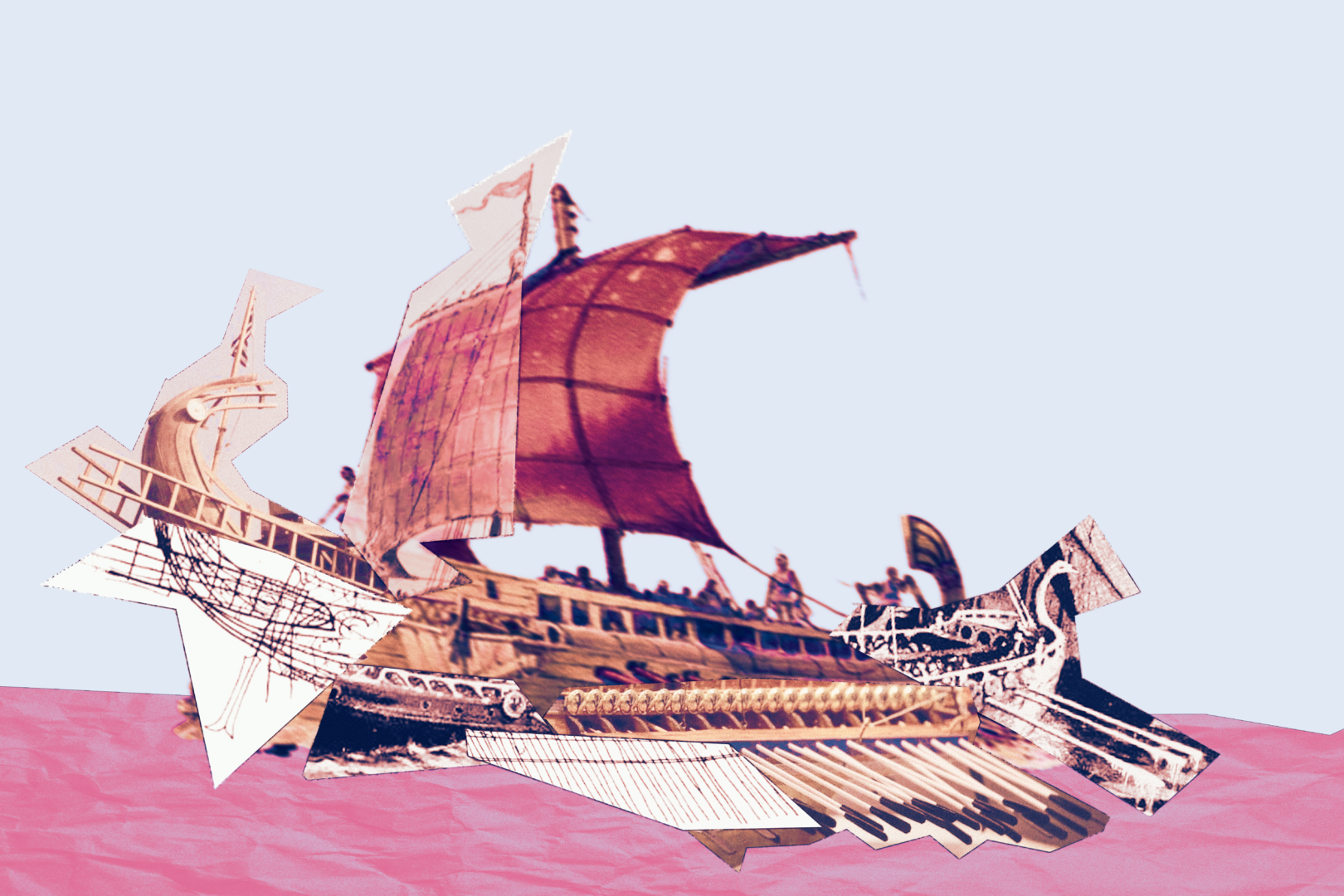
There’s a classic philosophical theory called the Ship of Theseus that asks if a ship is still the same ship if every plank is replaced over time. When we apply this idea to humans: if I ran away and became a Buddhist Swedish national named Erik, I would still be, at my core, “me.” There is something about identity, something in that mysterious “I” that exists outside of classification.
Hyper-individualism isn’t the answer. The identity one is born into can’t just be cast aside like an old coat; our “fictional” identities have real-world consequences and imprint on us whether we want them to or not.
However, people should seriously examine their thoughts and values to understand what they sincerely believe and what they have absorbed unquestioningly from their family and culture.
It takes bravery to self-reflect and find that core aspects of yourself were placed there by someone else, or to discover that you think differently from your family and community. But only by consciously shaping your identity can you become your true self rather than a fusion of external influences.
opinion@thedailycougar.com