Hailey Nguyen/The Cougar
Olivia Rodrigo’s charity single release “Serena Joy,” and Macklemore’s removal from Ed Sheeran’s tour following political statements onstage beg the question: Is it possible to appreciate an artist’s work while disregarding its implications and the artist’s views?
In a nation where “cancel culture” has become the norm, drawing the line between the artist and the art becomes a gray area.
Throughout history, music has been a crucial part of pop culture and social movements. Musicians can use their art to spread ideas through a language that reaches audiences around the world: music.
Using their platform
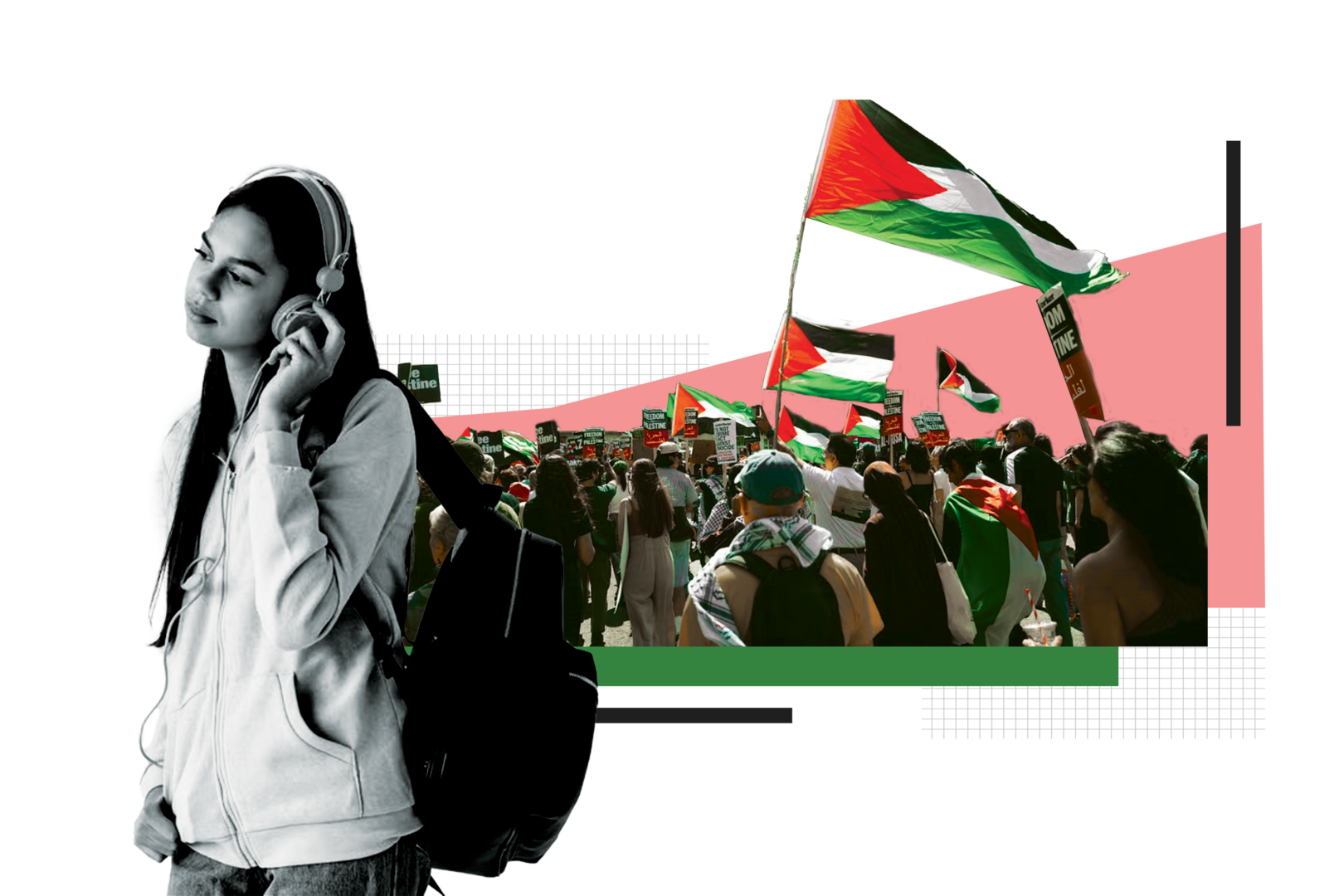
Macklemore was set to perform at eight of Ed Sheeran’s remaining U.S. shows but was dropped from the tour after several venues threatened to cancel their shows if he remained in the lineup. This occurred following the rapper’s “Free Palestine” statements and his performance of the protest song “Hind’s Hall” regarding the war in Gaza.
According to Rolling Stone, Macklemore said that part of the reason he wanted to do this tour was to speak up about this issue on a larger scale. Macklemore said Sheeran “couldn’t get past his public-facing, ‘I don’t take sides.’”
Following backlash from other artists and social media users, Sheeran addressed the issue, saying that he could no longer separate his musical career from his political views.
When it comes to war and devastation, refusing to “pick a side” perpetuates the issue by failing to bring it to light. Artists with large platforms should use their voices to bring attention to important causes rather than completely disconnecting their politics from their public personas.
The art of political expression
Artists often use their actual work as a form of protest and free speech. Olivia Rodrigo’s latest single “Serena Joy,” along with her charity concert, Daisy Chain Fields, gave her an outlet to express her stances.
“Serena Joy” draws inspiration from Margaret Atwood’s “The Handmaid’s Tale,” in which the character Serena Joy advocates for the society that eventually oppresses her. According to The Oxford Student, “Serena Joy” is “about complicity: using your own freedom to support a system that restricts the freedom of others, while assuming you will remain protected from its consequences,” echoing Rodrigo’s lyric, “If they do it to them, they’ll do it to you.”
Rodrigo’s song acts as a form of protest. At the very least, it gives Rodrigo a way to express her political concerns about policies affecting women in the U.S.
Rodrigo’s popularity gives both the song and her charity concert a wide reach while bringing attention and support to organizations that protect people’s rights.
Music has long reflected the political state of the world. From the 1960s through the 1990s, songs addressed movements and political conflicts ranging from the civil rights movement to apartheid. In 1985, Artists United Against Apartheid released “Sun City,” which called on musicians not to perform in South Africa. The 1969 Woodstock Music and Art Fair also became associated with messages of peace and opposition to the ongoing Vietnam War.
When music meets politics
Politics and music have always been connected. Artists can harness their skills and platforms to spread political awareness on a larger scale.
The idea of “separating the art from the artist,” or disregarding an artist’s views in favor of their other, nonpolitical works, can draw attention away from the political issues artists intentionally address through their work. Ignoring these forms of political expression risks overlooking the issues artists are trying to bring into public conversation.
Music is political.
opinion@thedailycougar