Chloe Sales/The Cougar
Election season is underway in the United States. Typically, such a season would consist of ads, speeches and debates; however, for Texans, the latter is almost entirely absent.
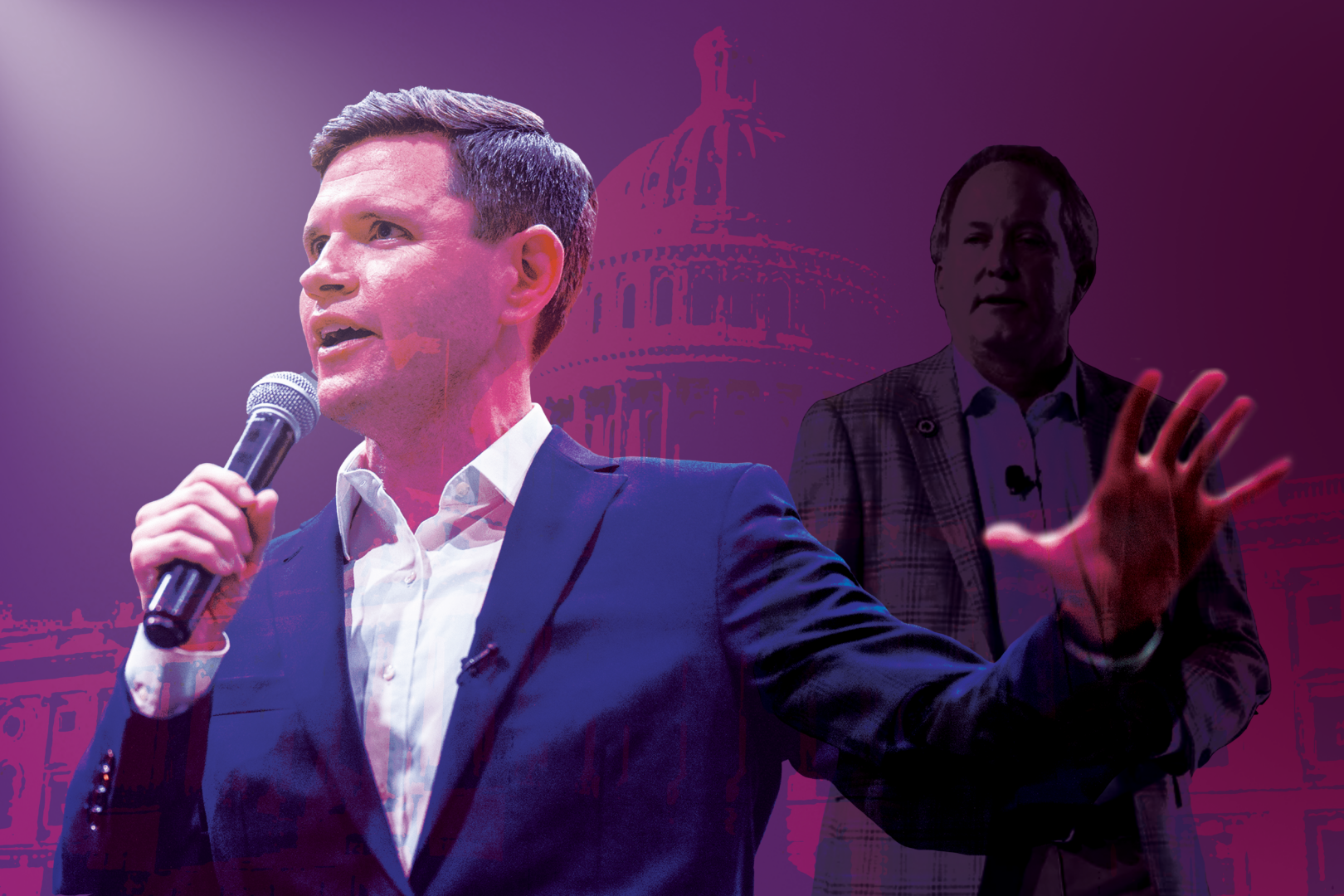
While candidates from both parties have declined debates, some prominent Texas Republicans have faced criticism for doing so, including Ken Paxton, who has declined calls to debate Democratic opponent James Talarico in the U.S. Senate race.
Some critics have suggested that Paxton’s reluctance to debate stems from concerns about how a public confrontation could affect his campaign. Regardless of Paxton’s speaking prowess, this assumption ignores the previously stated fact: Republicans across the board refuse to debate, not just Paxton.
Gov. Greg Abbott has debated his Democratic opponent in the past 12 years and three elections, and has won each one. This year, even though the race against Democrat Gina Hinojosa is extremely close, he has now decided that a debate is unnecessary.
Assuming that every Republican candidate avoids debates out of fear of losing oversimplifies the issue. Given the sheer number of people involved, it is reasonable to assume that at least some Republicans would be skilled enough at debate, or face opponents weak enough, to avoid losing.
However, that does not mean that they are not afraid. Texas Republicans occupy a unique position. It is no small stretch to say that Texas is Republican, but at the same time, they support Trump, who is being viewed more and more negatively as time goes on.
The political climate is further complicated by immigration enforcement in Texas, which could affect support among Latino voters, as well as unfavorable public perceptions of both major political parties.
From a campaign strategy perspective, declining debates may allow Republican candidates to avoid giving their opponents additional visibility.
The strategy behind avoiding debates
It may be said that the entire point of campaigns is to give attention to the political candidate.
Although some attention is necessary to inform voters about a candidate, Republican campaigns often structure their messaging, particularly in advertisements that voters regularly see, around presenting their candidate as a solution to the opposition.
By doing so, Republicans focus attention, and thus negativity, on their opponents, a strategy that relies on their opponents being the main focus. A debate would change this. Both parties are placed on equal footing, resulting in attention shared equally between them.
Participating in a debate could introduce political risks for Republican candidates who already benefit from a loyal voter base in Texas.
Although debates can offer candidates opportunities to reach voters, they also carry risks, which may help explain why some Republicans choose not to participate.
Voters deserve answers
Still, avoiding debates does not mean candidates should be exempt from answering voters’ questions.
Candidates regularly visit communities to connect with voters. Although Gov. Greg Abbott has emphasized the importance of community engagement in his campaign for a fourth term, participating in a debate would give voters another opportunity to hear directly from him.
If candidates want to earn voters’ trust, they should be willing to defend their positions on the debate stage rather than leave voters with unanswered questions.
opinion@thedailycougar.com