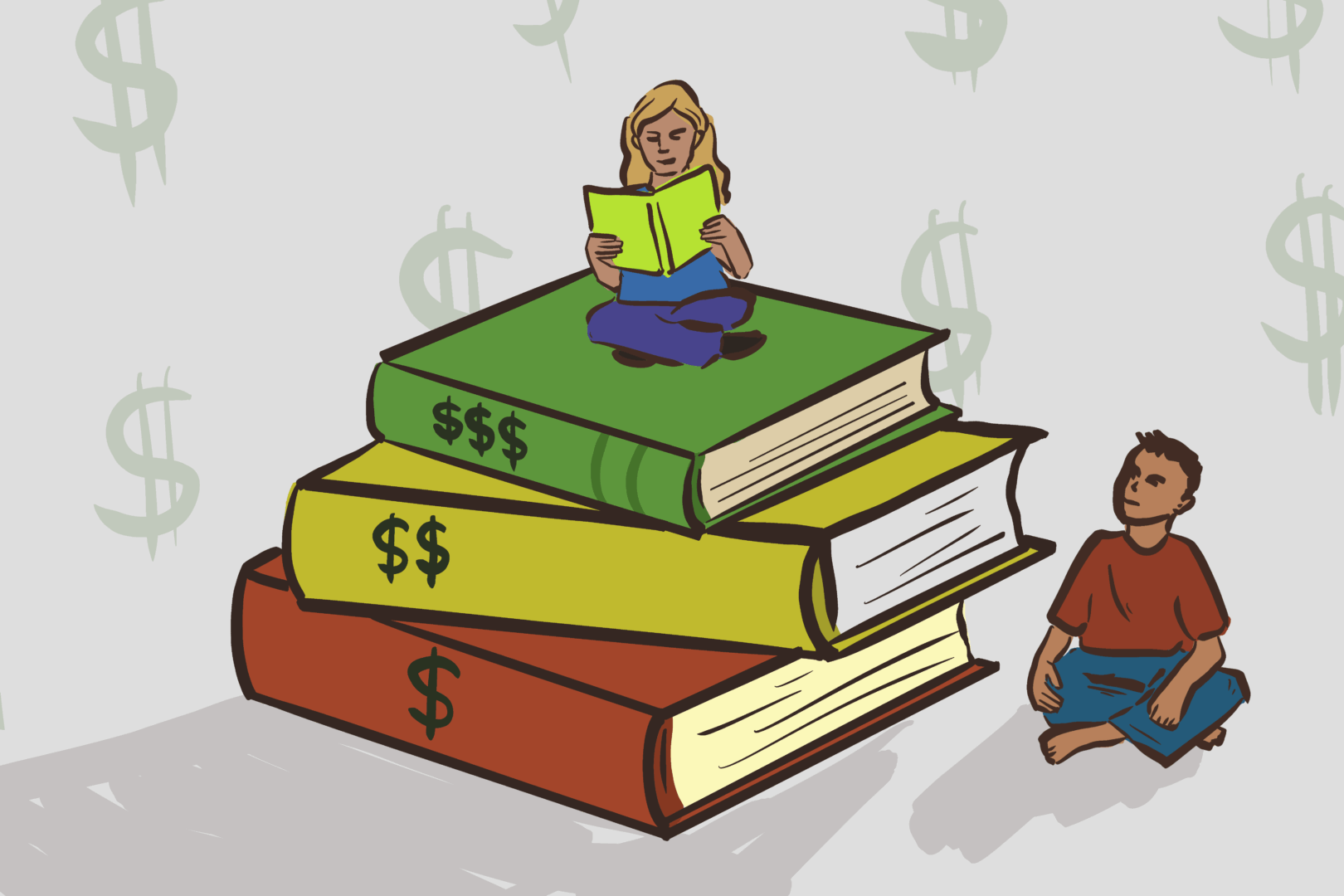
Lily Huynh/The Cougar
The school board meeting was unusually crowded. A hot-button education issue was afoot. A typically empty seating area now brimmed with parents talking over one another; the silence that signals contentment was nowhere to be found.
The school district had devised a redistricting plan that would send their children to a different, worse school, rendering years of careful planning about where to live seemingly meaningless.
School redistricting is just one of the many obstacles parents face in their ongoing effort to provide their child with a good education.
They had cast aside family supper for a cause of the utmost importance. Bound by something stronger than agreement or familiarity, they were united by concern for their children.
Failing to provide a good education for their children is one of the greatest fears parents face. This fear comes from the enormous advantage a good education provides and, in contrast, the lifelong disadvantage a poor one creates. A quality education should not depend on whether parents can afford thousands of dollars in tuition or on the particular area where a family lives.
Education Inequality
Many Americans today are aware of wealth inequality, but few notice the substantial educational imbalance. School ratings and funding are closely correlated with housing prices and tuition, creating an educational barrier for children from low-income households.
Public school funding, to a large extent, is funded by local property taxes. This funding structure means that public schools in low-property-value areas receive less funding.
These areas are often poorer, which puts their schools at a significant disadvantage. Adequate funding is necessary for teacher retention and for classroom resources; without it, school quality suffers.
Public school quality not only shapes housing prices but also increases the property values of households zoned to higher-performing schools. This dynamic further excludes lower-income families from living near strong public schools.
For example, Carroll Independent School District in Dallas has an average school rating of 9, and housing prices in the area reflect this quality. The median home price is $1.7 million, which is 391% higher than in surrounding metropolitan areas.
Private school and the class divide
Private schools provide an alternative for higher-income families when their household is not zoned to a strong public school. Lower-income households don’t have the same luxury since the average cost of K-12 private schools in America is $12,970/Year. Private schools often provide lower class size, more funding per student and have substantially better teacher retention.
In the U.S., wealthy families have the privilege of choosing their children’s education, as the cost of undereducation carries far fewer consequences for them than any tuition price. Underprivileged families, on the other hand, must juggle housing, tuition and school quality, all while the risk of their child being placed at a disadvantage looms over them.
Class and occupation are largely determined by a person’s education and socioeconomic status. When we structurally divide lower-income families to lower-performing schools, we are, in essence, solidifying people in the class they were born into.
A Step Backwards
Recently, in the U.S., we have implemented measures defunding public education and educational grants under the guise of freedom of choice and unnecessary bloat.
School vouchers have become a mainstay in many states, such as Florida and Arizona, with advocates arguing they offer expanded school choice and an opportunity for low-income students to attain a higher-quality education.
This is a policy that could have its merits if it weren’t shown to be largely ineffective and a ruse to cut public education funding, while funding private, often religious institutions.
A substantial number of people who make use of school voucher funds are not low-income and are already attending private schools. In Florida, 69% of applicants to the voucher program were already enrolled in private schools beforehand. Furthermore, even when states impose income caps like Iowa, the wealthier classes still benefit largely over poorer communities.
In Texas, state vouchers would provide $10,800 per child, but that falls short of the average Texas private school tuition of $14,906, cutting off many lower-income families. This shows that the main benefactors of school vouchers are mostly middle-income families or people already enrolled in private schools. Lower-income children who are in the most dire need of tuition funds do not benefit at a high enough rate to justify school vouchers.
School vouchers, in addition to being ineffective for lower-income families, also defund public schools by lowering public school enrollment and increasing educational spending without any funds going to public schools.
Building a fairer education system
It is a much better policy to shift the funding of public schools away from local property taxes and make it more reliant on state and federal funding, reducing educational inequality. In addition, expanding magnet school programs provides more school choice options for students regardless of income.
Education is not simply an issue that affects children; it influences every corner of American society, from higher civic engagement to lower poverty and crime rates. A child’s educational quality should not be limited by their family income, only by their desire to attain academic excellence. The educational policies and politicians we support today shape America’s future prosperity.
Opinion@thedailycougar.com