Chloe Sales/The Cougar
As summer turns to autumn, swimsuits are replaced by sweaters, apple cider makes its return and Halloween brings horror movies back into the spotlight.
For decades, horror movies have terrified audiences with slashers, zombies and supernatural possessions. However, behind the blood and gore lies something much more unsettling: the fears and anxieties of the real world.
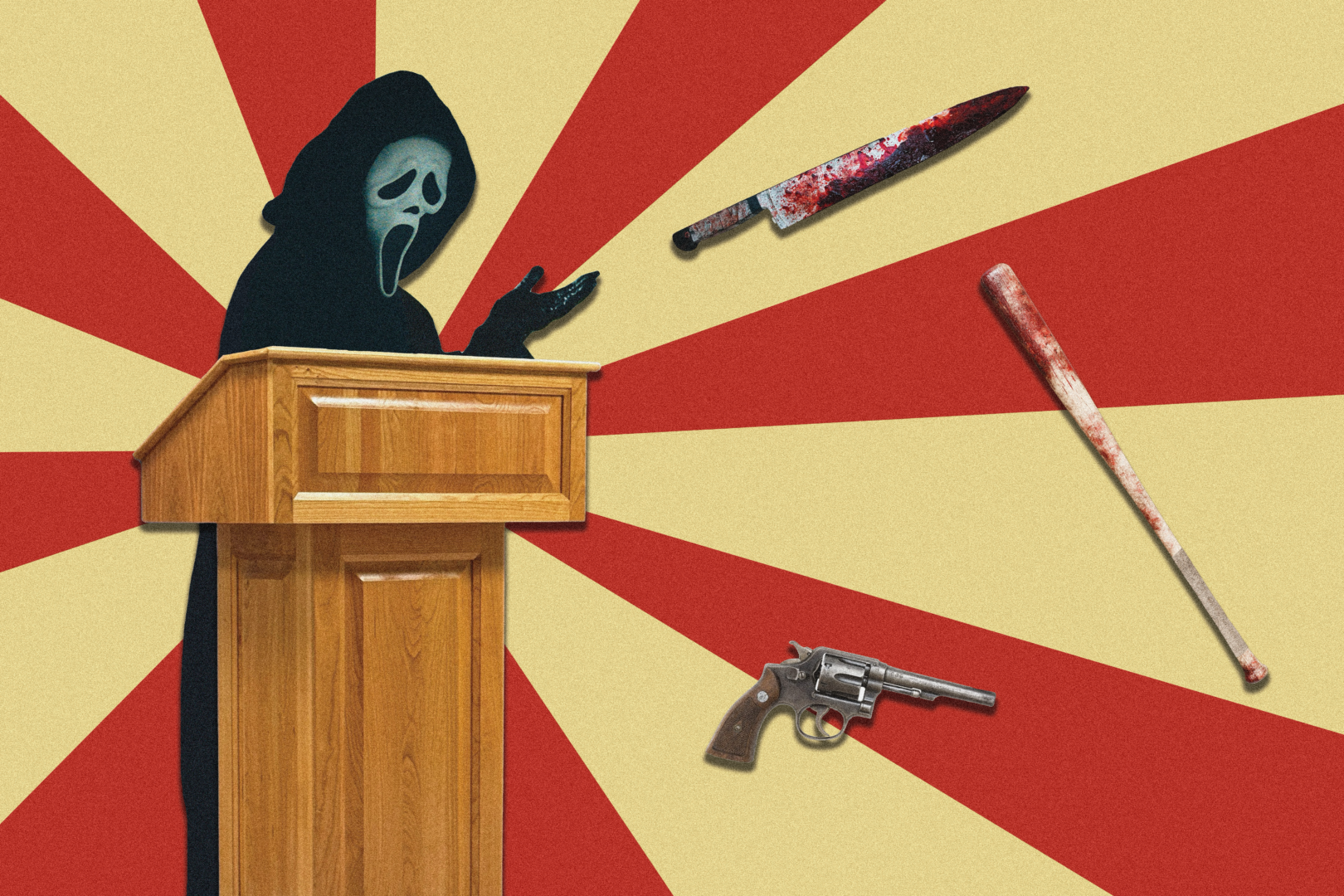
From political unrest to racial inequality, horror has consistently reflected the issues troubling society, proving that the genre is more than just entertainment.
Societal reflections
Horror movies reflect the fears of the society in which they’re made. The earliest example is during the Great Depression, when some of the most notable and recognizable horror monsters came to be. Films such as “Dracula,” “Frankenstein” and “White Zombie” explore fears surrounding outsiders, with some of their portrayals reflecting the racial prejudices of their time and utilizing an “us versus them” mindset.
These films can also be interpreted as reflections of the anxieties surrounding immigration and cultural differences during this period. Americans were not supportive of immigration during the Great Depression and had strict immigration laws.
Migrants from Mexico faced prejudice and racism and were not as welcomed to the U.S. as European migrants. Mexican migrants were stereotyped as barbaric and unintelligent. Black Americans faced similar stereotypes, portrayed as brutish. These stereotypes favored the characterization of the monsters in these movies.
Victor Halperin’s “White Zombie” uses Haiti and its portrayal of Vodou as the backdrop for a story about zombies controlled by an immoral master, drawing parallels to slavery and exploitation.
Other historic events and decades sparked their own horror trends.
With the breakdown of traditional religion during the 1960s came an influx of occult-based horror, due to the fear around unfamiliar religions that were integrating with Western culture. This brought movies like “The Exorcist” and “Rosemary’s Baby.”
The 1980s saw a rise in slashers with the rise of conservatism after Reagan took office in 1981. Teenagers were brutally murdered after partaking in activities that were taboo at the time: premarital sex, smoking and drinking. Slashers fell out of fashion for a brief period after the Columbine tragedy.
Post-9/11 horror focused heavily on arbitrary violence, highlighting the anxieties of Americans feeling as if another attack is imminent and death is random, shown in movies like “The Strangers.”
This era also brought back the “Us versus Them” trope, as seen in movies like “Cloverfield.” This time, it was used to represent the rise in nationalism: Americans versus everyone else.
Creators’ perspective
The messenger of these themes is equally important in context. For a long time, the types of voices and perspectives in Hollywood lacked diversity. If you look at the top horror films from the 1980s, the majority of them were created and directed by cisgender white men.
As Hollywood became more diverse, new perspectives gained visibility, including those of Black filmmakers who used horror to explore experiences of racism and inequality.
Black horror has been around since the 1940s, but it really started to hit the mainstream with Bernard Rose’s Candyman. One of the genre’s most notable films is Jordan Peele’s “Get Out” which explores themes of the exploitation of Black Americans and appropriation of Black culture.
Similarly, Clive Barker’s “Hellraiser” is a staple in a horror subgenre known as queer horror. Hellraiser blends sexuality with pain and draws much of the antagonist’s characterization from queer subcultures he came in contact with as a young gay man.
Jordan Peele and Clive Barker draw from their personal experiences to shape their storytelling. Their perspectives demonstrate how filmmakers can use their own fears and experiences to give horror deeper meaning.
Current state of horror
Horror movies have a recent revival. Over the past few years, the horror genre has been performing well critically and at the box office.
Notably, “Sinners” was nominated for 16 Oscars, one of them being for Best Picture, making it one of nine total horror movies ever to be nominated. One-third of horror nominations for Best Picture took place in the last three years.
Since the pandemic, psychological horror has gained attention, particularly stories that explore isolation and the fear of being trapped in familiar spaces. The overturning of Roe v. Wade brought an increase in horror related to women’s autonomy, like “Obsession” and “Companion.”
Horror is often dismissed as nothing more than graphic violence, but the idea that the genre has only recently become meaningful overlooks its long history of social commentary.
This October, when you sit down to watch a horror movie, look beyond the blood and gore. The most frightening part of these stories might not be the monsters themselves, but what they reveal about the world we live in.
opinion@thedailycougar.com