Isabel Bustos/ The Cougar
It’s strange to think about what our parents accomplished at our age. During their 20s, my parents moved to a foreign country, secured well-paying jobs without college degrees, married and had a daughter who still can’t sleep without her favorite plushies.
Oh, and they bought a house.
If someone told me that in a few years, I’d own a home or even accomplish half of what my parents did, I’d laugh. Not because I don’t want that for my future, but because it doesn’t feel possible right now.
And I’m not alone. Much of Gen Z feels the same way. Right now, affording a home is incredibly difficult, pushing many young adults to stay with their parents or split rent with roommates. It can feel like we’re falling behind, missing milestones that previous generations had already reached by this point.
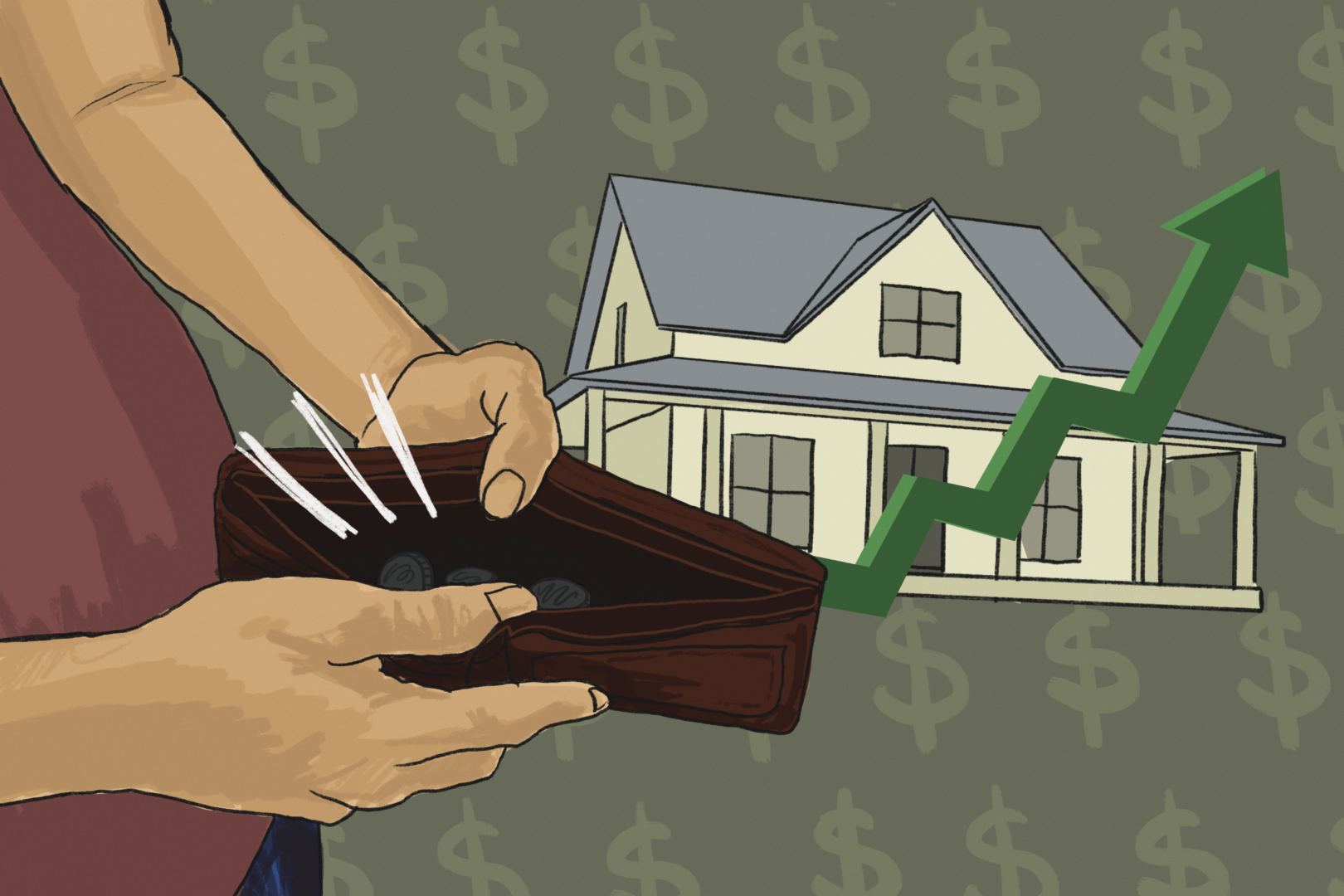
But contrary to what boomers say, it’s not because we’re not working hard enough or living above our means. It’s because buying a house has become increasingly out of reach.
Statistically, nearly impossible
Growing up, we were told to go to college, get a good job, get married and buy a house to raise a family. Most of Gen Z are able to get to the job portion (which has also proven difficult), but once we got to the part about buying a house, many backed down. Here’s why.
Let’s say I’m newly married, make upwards of $83,730 a year with my spouse and we’re ready to buy a house. We found a nice home in a decent area of Houston listed at $270,000, and we saved up about $40,000 on the down payment.
Right now, interest rates in Houston are nearing 6.5% for a 30-year mortgage, so the minimum monthly payment on a $230,000 loan is roughly $2,050, assuming a good credit score. Not much different than an apartment, but we also need to consider an extra $6-12,000 in closing costs and the fact that we bring in about $5,500 a month after taxes.
We also need to factor in property taxes, utilities, furniture, repairs, HOA fees, a latte here and there and some new student loans. Our $5,500 a month isn’t going to cut it. And that’s when we closed Zillow and stayed in our apartment.
This is the reality for many Gen Z adults in this economy. We are told that we’re too lazy and spending frivolously, and that’s why we can’t afford a home. But it’s really just an economy that is not suitable for a whole generation of first-time buyers.
It’s all about the money
According to the National Association of Realtors, the median age of first-time homebuyers has risen to 40, compared to around 30 just a few decades ago.
At the same time, home prices have risen far faster than wages. Data from housing reports show that while household incomes have increased modestly over the years, home prices have surged dramatically, especially after 2020. In cities like Houston, what was once considered an affordable housing market is becoming increasingly competitive, with rising prices and higher property taxes making ownership harder to reach.
And then there’s student debt. According to Congress, Americans collectively owe over $1.6 trillion in student loans. For many Gen Z adults, that monthly payment eats into what could have been savings for a down payment or extra room in a mortgage budget. We’re juggling financial obligations that previous generations didn’t face on the same scale.
Interest rates have only made things worse. Even a small increase in mortgage rates can add hundreds of dollars to a monthly payment. A home that may have felt manageable just a few years ago quickly becomes unaffordable when rates climb above 6%, locking many first-time buyers out of the market entirely.
So no, Gen Z isn’t lazy, irresponsible or unwilling to work. We’re navigating an economy where the rules have changed, but the expectations haven’t.
If buying a home is still considered a basic milestone, then it should be attainable for the people working toward it. Until then, telling young adults to “just work harder” ignores the reality we’re living in.
opinoin@thedailycougar.com