Lily Huynh/the cougar
Student journalists are growing increasingly concerned about the precedent set by the White House’s recent media ban and growing distrust in media as a whole.
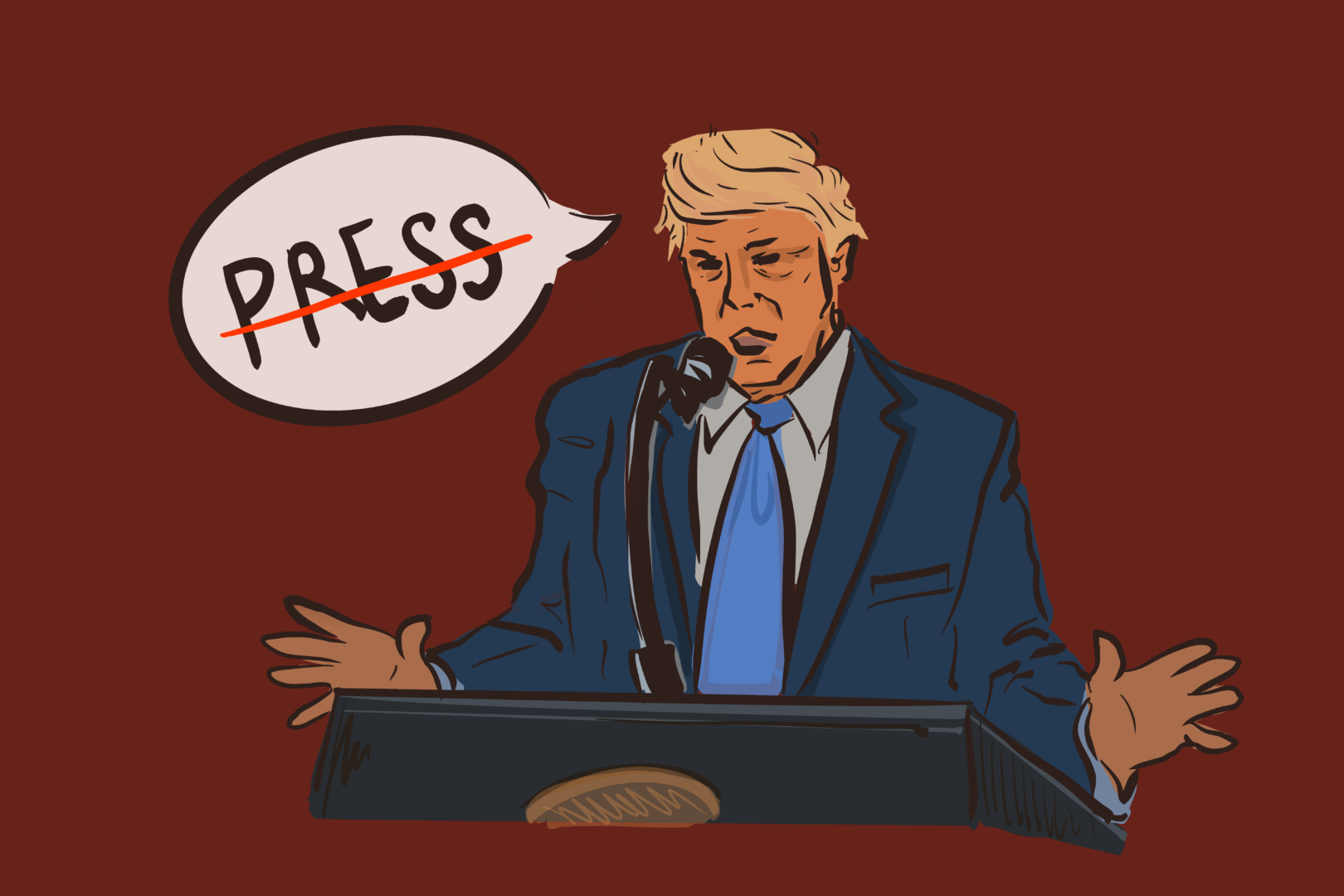
Last month, the White House banned CNN, Politico and MS NOW reporters from its press pool, citing inaccurate and negative reporting. Since then, the media outlets have filed a lawsuit against President Donald Trump, calling his actions a direct attack on the First Amendment.
“The president and his administration have continued to make clear that this ban has only one purpose: to punish reporting he doesn’t like,” said head lawyer for CNN, Politico and MS NOW Theodore J. Boutrous Jr.
Although a judge has lifted the ban, the White House continues to push back. College journalists are following the story amid the tension.
According to a recent blog post by the Student Press Law Center, incidents such as these reveal a climate where officials are encouraged to treat scrutiny as misconduct and access as a favor.
The SPLC also highlights the Sherrill v. Knight (1977) case in relation to this First Amendment battle. It emphasizes the claim that although the White House is not constitutionally obligated to allow every journalist into its doors, it must not deny access on unclear grounds.
This type of situation is on the mind of several UH student journalists as well.
“We’re in a position where we’re a part of the community that we’re covering and speaking to,” said journalism junior David Uribe. “It just makes it harder to do that when you can’t fully express without the fear of what backlash can happen because of that.”
Some students, such as Dylan Hembrough from Southern Illinois University Edwardsville, are all too familiar with being pressured as well after the student newspaper published articles the university disapproved of. After some time, the university began recording several interviews with the student newspaper.
“Moves such as these threaten freedom of speech and freedom of the press, allowing the SIUE administration to shape a story in real time and potentially frighten employees into self-censoring,” Hembrough stated in a blog post.
As for the more widespread ramifications, Uribe said he’s worried that journalists might start to self-censor, adding on to an existing lack of trust in media.
“I think this situation is just making journalists more cautious in everything they do, not only what they’re reporting, but where they’re reporting it from, like their sources,” Uribe said. “I feel like it will make independent reporters more important, rather than big stations covering things.”
Journalism junior Gilberto Manzanares calls the ban incredibly stupid and petty.
“I don’t believe this ban will necessarily affect how universities treat student journalists directly, but it’s definitely inconsiderate and discouraging for students in this field,” Manzanares said. “It’s not only preventing journalists from reporting on these topics but also affecting how we receive information as the general public.”
Students also believe that the White House’s actions are authoritarian and journalists should have the right to interview the president and others in positions of power.
“Journalists should be back in the White House fairly soon, because access to the White House is not a privilege, it’s a right,” said political science senior Jeffrey Hernandez Jr.
Hernandez believes that people should seek out news independently, especially as major media outlets grow more polarized.
“If anything, this should just show future students how important journalism is,” Hernandez said. “Journalists are really on the front lines of every conflict, whether it’s with a camera or with a pen. They’re an extremely important part of the political process, and without them, nothing really works.”
news@thedailycougar.com