Lily Huynh/The Cougar
Social media has changed the way we connect with celebrities. Thanks to platforms such as Instagram and TikTok, we get a window into their lives: who they are friends with based on who they follow, where they vacation and even what their children and family look like.
Unlike the era dominated by paparazzi, much of what we know about celebrities today comes from what they choose to share about themselves. Their vacations, relationships and milestones are posted directly from their own camera rolls rather than captured by invasive photographers.
The obsession hasn’t gone away. It has shifted from paparazzi chasing celebrities to followers who feel entitled to every detail of their lives.
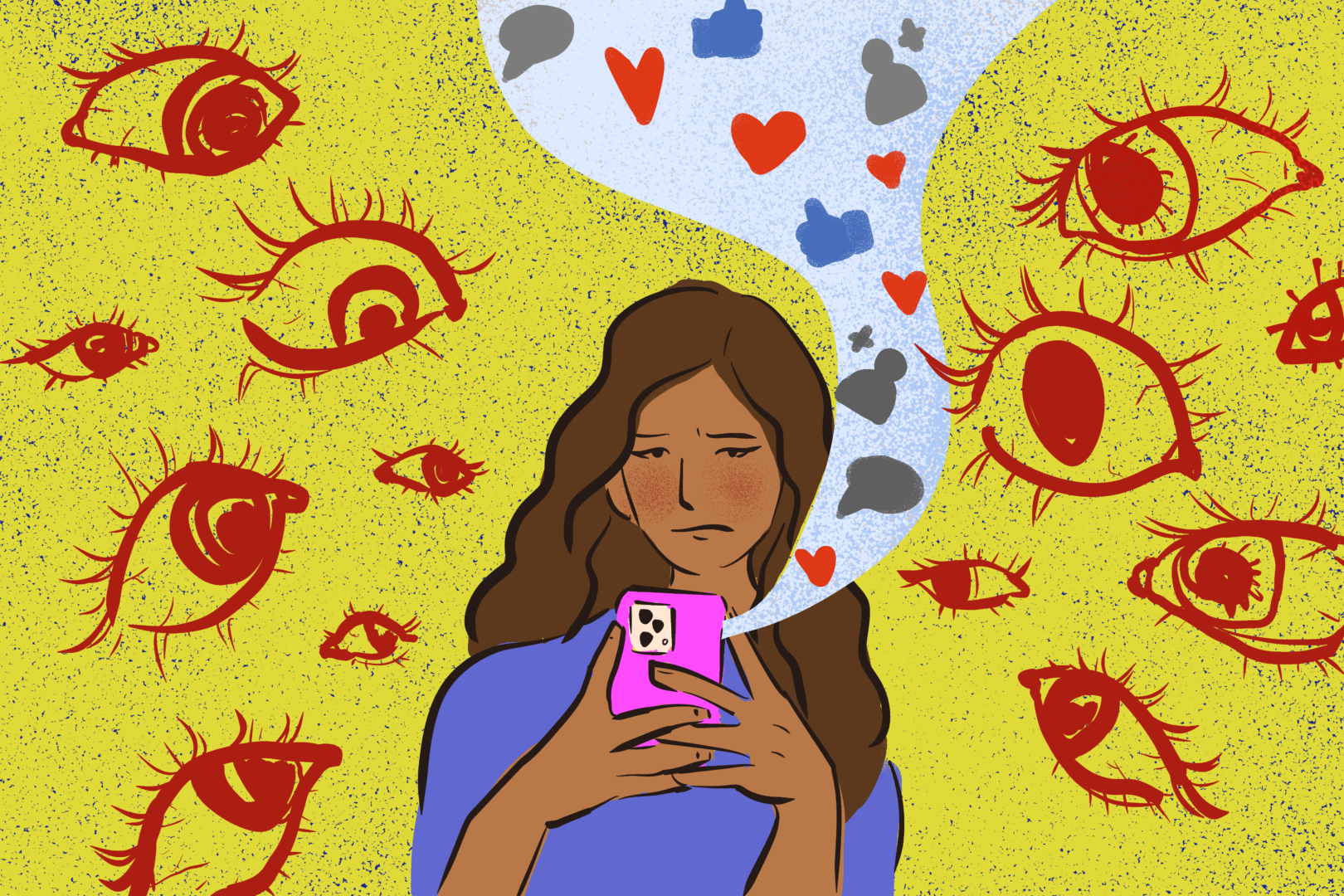
From camera flashes to extreme opinions, unhealthy parasocial relationships have become increasingly normalized, making it easier for admiration to turn into obsession.
Before social media
In the 1990s and early 2000s, celebrity obsession was largely fueled by paparazzi culture. Though the origins of paparazzi are unknown, press photographers began targeting celebrities in Rome around the 1950s.
Magazines, websites, blogs and newspapers were the only way to see what your favorite actor, athlete or musician was up to. That information was limited and sometimes delayed, leaving fans with only carefully selected glimpses into celebrities’ lives.
As public interest in celebrities grew, those carefully curated glimpses were no longer enough. Publications began competing for more exclusive and intimate access, fueling the rise of paparazzi culture.
Author Thea Hawlin writes, “Over time, it was these secretive and increasingly scandalous images that made the front pages. The thrill of the chase was no longer enough; a scoop was needed to sell publications; to get the right picture was expensive business.”
Pictures of celebrities quickly became more intrusive, offering insight into their lives rather than simply showing the outfit they were wearing. Big magazines and newspapers began paying paparazzi to capture photos to be the first to know the latest relevant scandal.
As this became the norm in entertainment media, paparazzi began crossing the line from documenting public appearances to invading celebrities’ private lives. The demand for increasingly exclusive photos created a culture where getting the perfect shot often mattered more than respecting personal boundaries.
One of the most well-known examples is Princess Diana, who was being pursued by paparazzi when the car carrying her crashed in Paris, killing her and two others. Britney Spears experienced similar invasions of privacy throughout the 2000s, with photographers relentlessly surrounding her, following her while she held her infant son and in one instance, even obstructing an ambulance transporting her to the hospital.
Present day
Now, social media breeds a different type of availability to people’s lives that the human brain was not made to comprehend.
Unlike the 1990s and early 2000s, parasocial relationships are extreme due to social media rather than paparazzi. Now, everything is online. Anyone can go out and film celebrities directly from their phone.
There are also new types of celebrities: influencers, TikTokers, Instagram models, YouTubers and reality TV stars. These are the new victims of parasocial relationships.
These individuals speak to their followers as if they’re friends. Updating them on their day-to-day life, getting ready with them, sharing major milestones and their basic interests, all for free. Making a friend out of the people they were only meant to entertain.
They ask followers for advice, share vulnerable moments and celebrate milestones together. Over time, that repeated interaction makes it easy to forget that the relationship only exists through a screen.
Different from actors or musicians, influencers often build audiences by sharing ordinary parts of their daily lives, making them feel more relatable than traditional celebrities.
Loneliness helps breed parasocial friendships
Humans naturally crave relationships with others who are similar to them. So, when that feeling of finding someone like you is replaced by someone sharing their life through a screen, it explains why one might become attached to them and build a one-sided emotional relationship.
The same basic concepts from real-life relationships are built: trust, loyalty and love. A huge example of this has been casually shown on many people’s screens for most of the summer: Love Island.
While many might see it as just a silly reality show about finding love, others took it personally. The show revolves around daily hour-long episodes, five days a week for six weeks straight.
Contestants are filmed 24/7, often stating they forgot there were cameras rolling as they left. Viewers begin to see themselves through these participants and feel as though they know them after they’ve become part of their daily schedule.
The show’s social media accounts had to post multiple times to ask fans to watch without bullying the contestants or sending hate. Despite those warnings, some fans became so emotionally invested that they attacked islanders online over mistakes many people make in everyday life.
Arguments are circulating across TikTok, Instagram and Twitter about the show’s contestants. Some have taken it as far as posting racist posts about the participants and allegedly calling CPS on their families. These relationships are unique as they are one-sided and toxic.
Celebrity obsession isn’t new. What has changed is how accessible celebrities have become. Social media has turned admiration into constant interaction, making it easier than ever for people to mistake familiarity for friendship.
As that line continues to blur, parasocial relationships will likely become even more common, and potentially more harmful, for both creators and the audiences who follow them.
opinion@thedailycougar.com